Ask a Phoenix, Oregon seller how the market is doing and most will point to the same number their agent's report shows: the median sale price is up more than 22 percent from a year ago, and homes are moving in about 11 days instead of a month. Ask why the price per square foot fell during that same stretch, and fewer people have an answer.
Both numbers are accurate for the trailing three months through August 2026. Neither means what a first glance suggests. The story underneath them starts on September 8, 2020, when the Almeda Fire burned roughly 3,000 acres through Talent and Phoenix and damaged or destroyed more than 2,500 homes and 600 businesses. Six years later, what got rebuilt is not a copy of what burned, and that difference is doing most of the work in today's price numbers.
The Insurance Question That Surfaces Mid-Transaction
Before the pricing puzzle, a more immediate friction point deserves attention, because it shows up during escrow rather than on a listing sheet. KLCC reported that Oregon law requires insurers to include fire coverage in home policies, but it does not stop them from declining to write a new policy or refusing to renew an existing one in areas they consider high wildfire risk, a point Oregon's insurance commissioner Andrew Stolfi has confirmed publicly. KLCC A newer, fire-hardened build does not automatically guarantee an easier underwriting conversation.
There is a document trail worth asking for, though. Homeowners who rebuilt through Oregon's Fire Hardening Grant Program received rebates for fire-resistant siding, fire-resistant roofing, and ember-resistant vents, and the Oregon Department of Energy's Energy Efficient Wildfire Rebuilding Incentive paid $3,000 for homes rebuilt to current code and $6,000 for homes built above code. If a seller has that paperwork, it can matter in an insurance conversation even though it does not change the underwriting rules themselves. State Sen. Jeff Golden of Ashland has also pushed legislation aimed at funding neighborhood-level defensible space work, a sign that lawmakers see this as an ongoing problem rather than one the rebuild has solved.
Ninety-Five Percent Rebuilt, But Not Evenly
Progress on the rebuild has not moved at a constant pace, and the parts that moved slowest tell you something specific. At the three-year mark, Phoenix's community and economic development director estimated the city was near 50 percent rebuilt for single-family and multi-family housing, while Talent's mayor put that city at about 72 percent rebuilt or permitted. By the five-year mark, KOBI-TV reported that state Rep. Pam Marsh described progress in the hardest-hit manufactured home parks along Highway 99 this way:
"We are probably 80% there."
That 80 percent referred specifically to parks like Royal Oaks and Talent Mobile Estates, the segment of housing stock that was cheapest to replace and slowest to come back. Royal Oaks is a case study in why. In 2021, Oregon paid more than $20 million for 140 modular homes from an Idaho manufacturer to house survivors quickly. State inspectors found the first units unfit for occupancy, with cracked walls and water intrusion, and the state eventually sued the manufacturers and auctioned off roughly half the defective units. It took nearly five years for Royal Oaks to be fully rebuilt.
By this September's sixth anniversary, Marsh's estimate for the broader housing stock lost in the fire had climbed to around 95 percent rebuilt. The math implies that the last stretch, the segment still missing, is disproportionately concentrated in exactly the housing type that was hardest to replace: smaller, cheaper, manufactured units.
What the Price-Per-Square-Foot Reveals
That uneven rebuild is the mechanism behind the pricing paradox. Over the trailing three months through August 2026, the median sale price for a Phoenix home sat at $477,000, up 22.4 percent from the same period a year earlier. In the same window, the median sale price per square foot was $263, down 5.4 percent year over year. Only 13 homes sold in August 2026, down from 17 the year before, a sample small enough that any single closing can swing the monthly median.
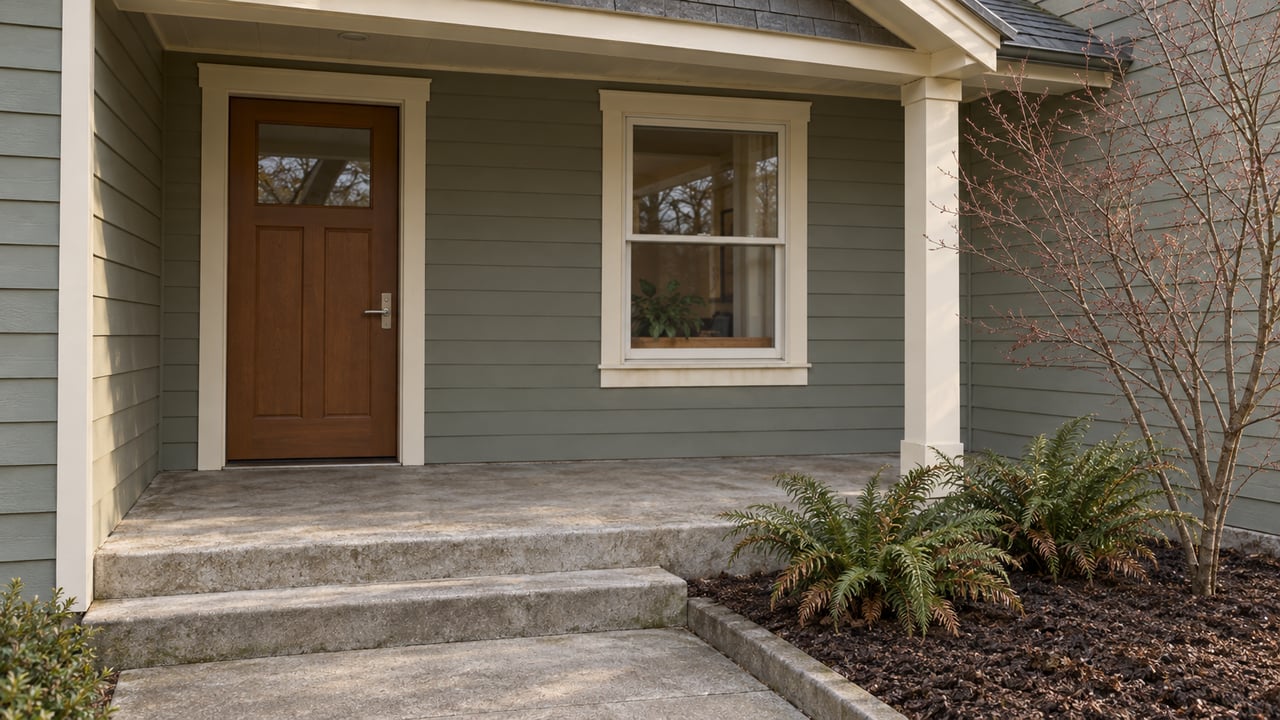
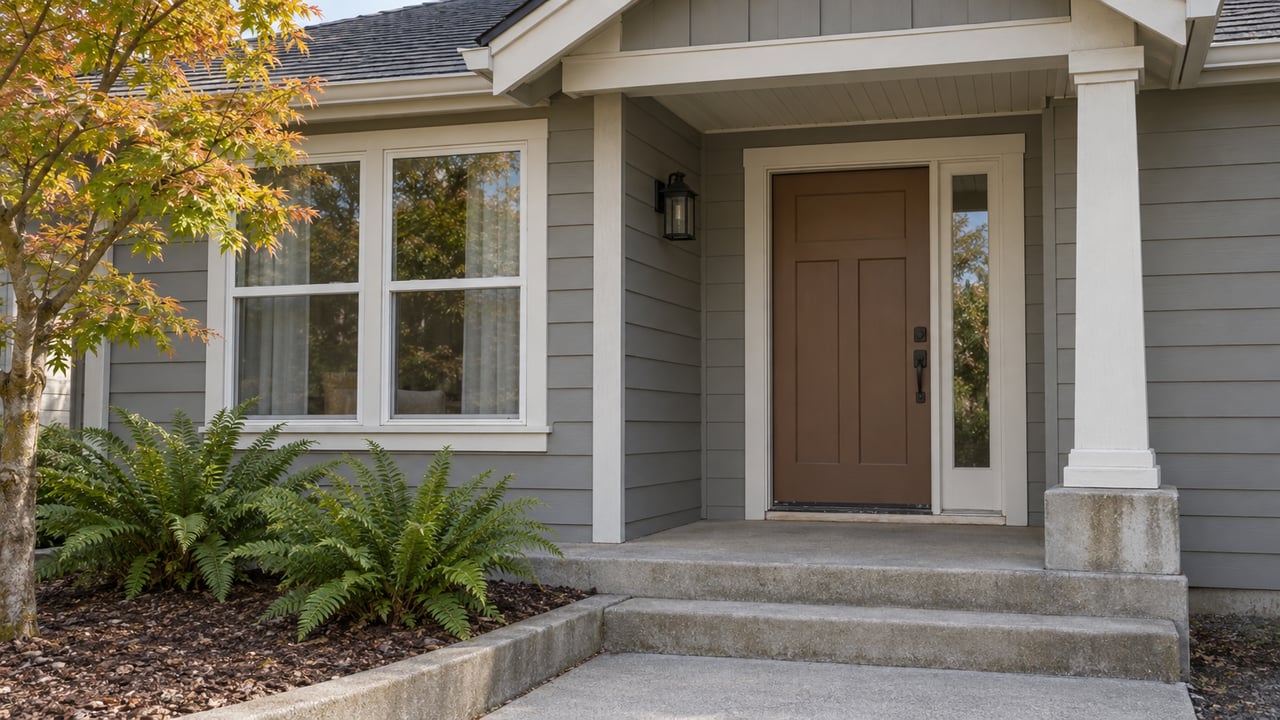
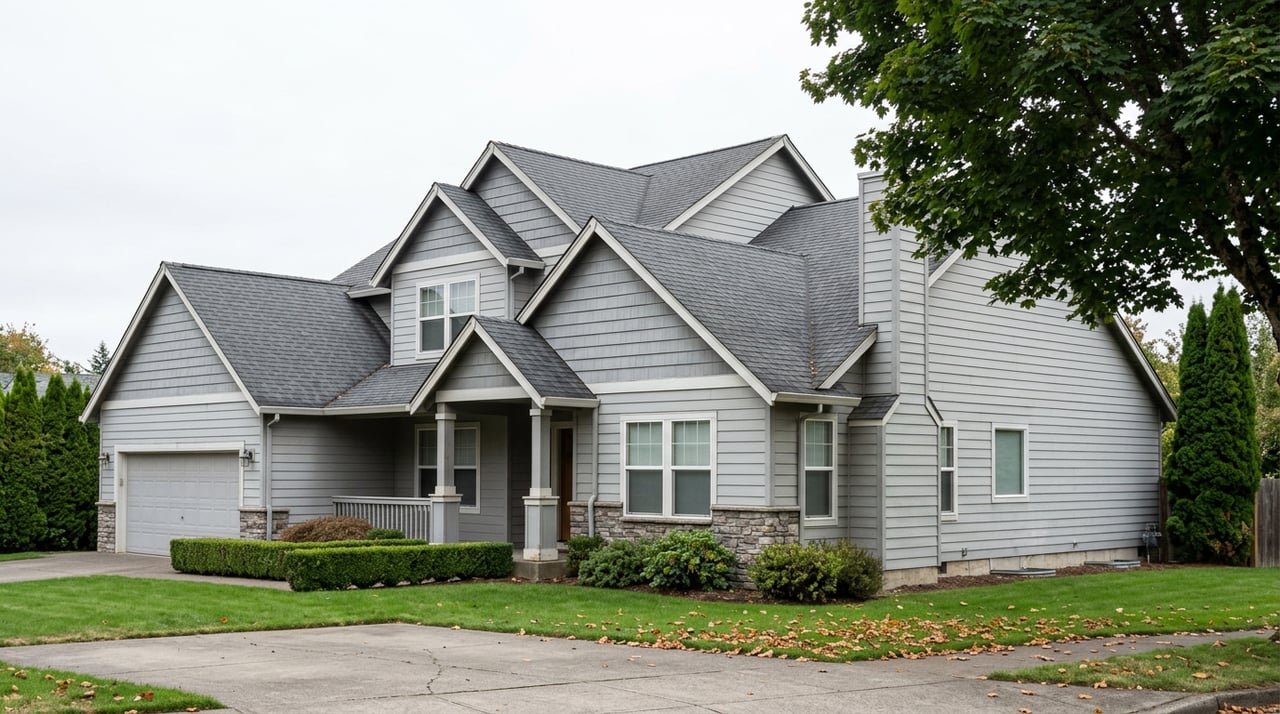
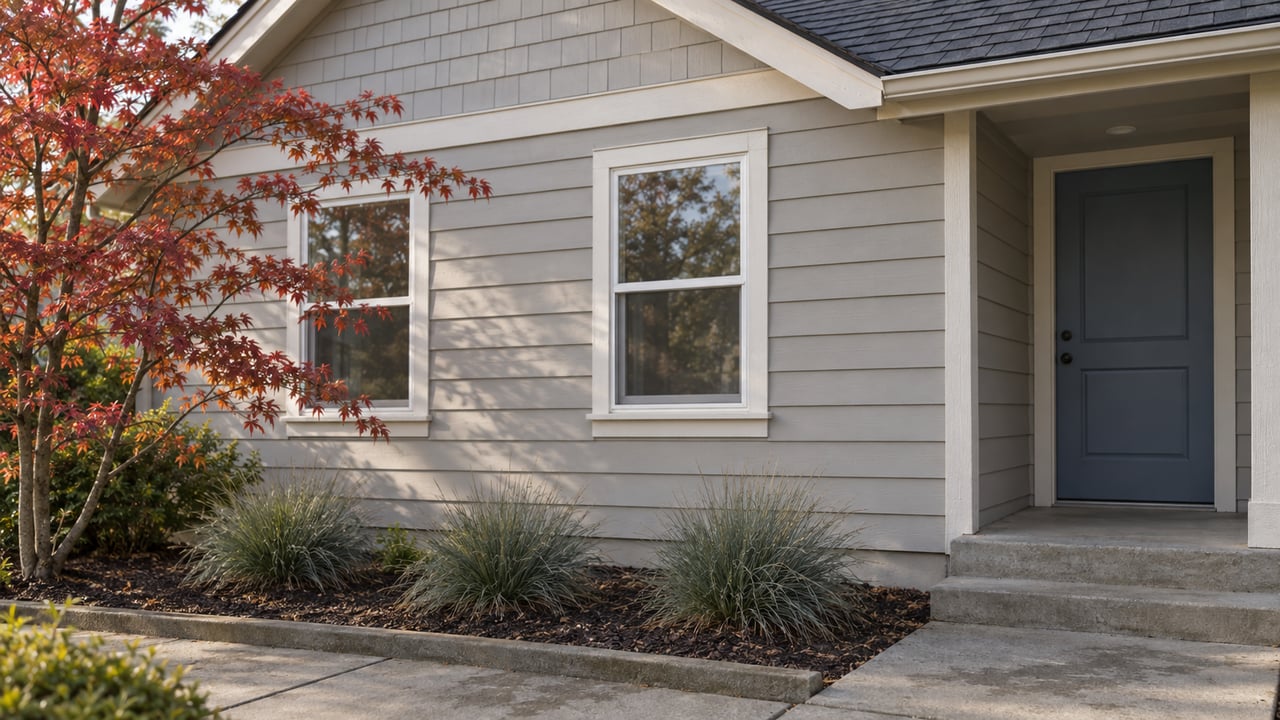
A rising total price alongside a falling price per square foot points to one thing: the homes moving through the market are bigger, not more expensive per square foot. That is exactly what you would expect if a fire replaced smaller, older, manufactured housing stock with larger single-family construction built to current or above-current code. The median isn't measuring the same kind of house it was measuring five years ago. It's measuring a different mix of houses entirely, with the newer, larger, code-plus segment carrying more weight in the average than it used to.
For a buyer comparing Phoenix against other Jackson County towns on a median-price chart alone, that composition shift can be easy to miss and easy to misread as demand pressure.
Where the Next Wave of Affordable Stock Is Coming From
The gap left by the manufactured home segment is starting to get filled, just not in the same form. The nonprofit AGE+ secured a $7.8 million grant from Oregon Housing and Community Services to build Phoenix Commons, a development of 40 modular homes for adults 55 and older on a site where an assisted living facility burned in the fire. The project is designed to let residents age in place, with a community center and on-site services built in.
For anyone weighing a senior transition or downsizing move in the Rogue Valley, that project matters beyond its unit count. It signals that more affordable, right-sized inventory is coming to Phoenix over the next couple of years, which could pull the composition of the market back toward smaller units and, in turn, moderate some of the price-per-unit growth the current mix is producing.
What Survived Also Tells You Something
Not everything in Phoenix needed to be rebuilt from scratch, and what came back intact says something about the town's continuity. D&S Harley-Davidson, a family business on Phoenix's main commercial corridor since the early 1970s, lost its building and nearly 60 motorcycles, most of them belonging to customers, in the fire. Owner Kim O'Toole and her sisters rebuilt and reopened. Downtown now carries a permanent marker of the fire as well: a metal sunflower installation, the idea of Oregon Cheese Cave owner Mélodie Picard, standing as a tribute alongside the annual tradition of placing sunflowers along Main Street each September 8, a custom that traces back to Urban Uprise Farm's flower distribution in the days right after the fire. Phoenix's First Presbyterian Church still rings its bell every anniversary at 11:04 a.m., the exact time of the fire's first alarm in 2020.
None of that shows up in a comparative market analysis, but it is part of why a rebuilt commercial corridor with recognizable, long-standing businesses reads differently to an investor or a family evaluating long-term neighborhood stability than a corridor built entirely from scratch would.
What This Means If You're Comparing Phoenix Right Now
A few practical takeaways follow from all of this:
- Get an insurance quote before you write an offer, not after. Oregon's rules let carriers decline coverage in wildfire-designated areas, so this is not a step to leave until underwriting.
- Ask sellers whether their home received Fire Hardening Grant or Energy Efficient Wildfire Rebuilding Incentive funds. The paperwork can help frame an insurance conversation even if it doesn't guarantee a specific outcome.
- When you compare listings, look at price per square foot alongside total price. In a market where the mix of homes is shifting this fast, the two numbers can tell different stories.
- Expect more entry-level and senior-oriented inventory to arrive over the next year or two as projects like Phoenix Commons come online, which could shift the current price mix again.
A Couple of Quick Questions
Does a home's rebuild date affect what I'll pay for insurance in Phoenix? Not directly under current Oregon law. Insurers can decline to write or renew a policy based on an area's wildfire designation. Documentation of fire-hardening upgrades can still be useful context to bring to an insurance agent, even though it isn't a guarantee.
Is all of Phoenix considered high wildfire risk? Modeling puts some level of 30-year wildfire risk exposure on effectively all properties in the city, though the designation is characterized as moderate rather than severe. That broad exposure is part of why insurance underwriting questions apply across the city rather than to a handful of specific streets.
If you're weighing Phoenix against other Rogue Valley towns and want help reading a listing's price against what actually got rebuilt behind it, Matt Misener has been through enough of these closings to walk you through the insurance conversation before you're locked into an offer. Let's Connect.
This article is general information, not legal, tax or financial advice. Consult a qualified professional about your situation.